/ˈjuːruːɡaɪ/
a.k.a. JGY
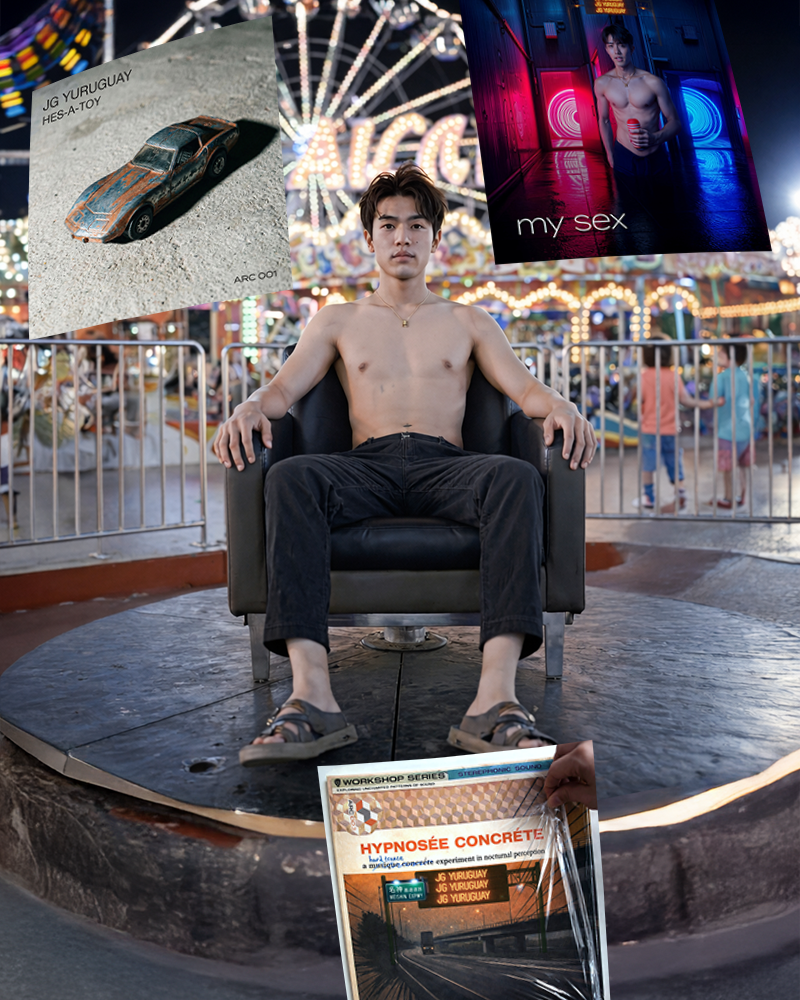
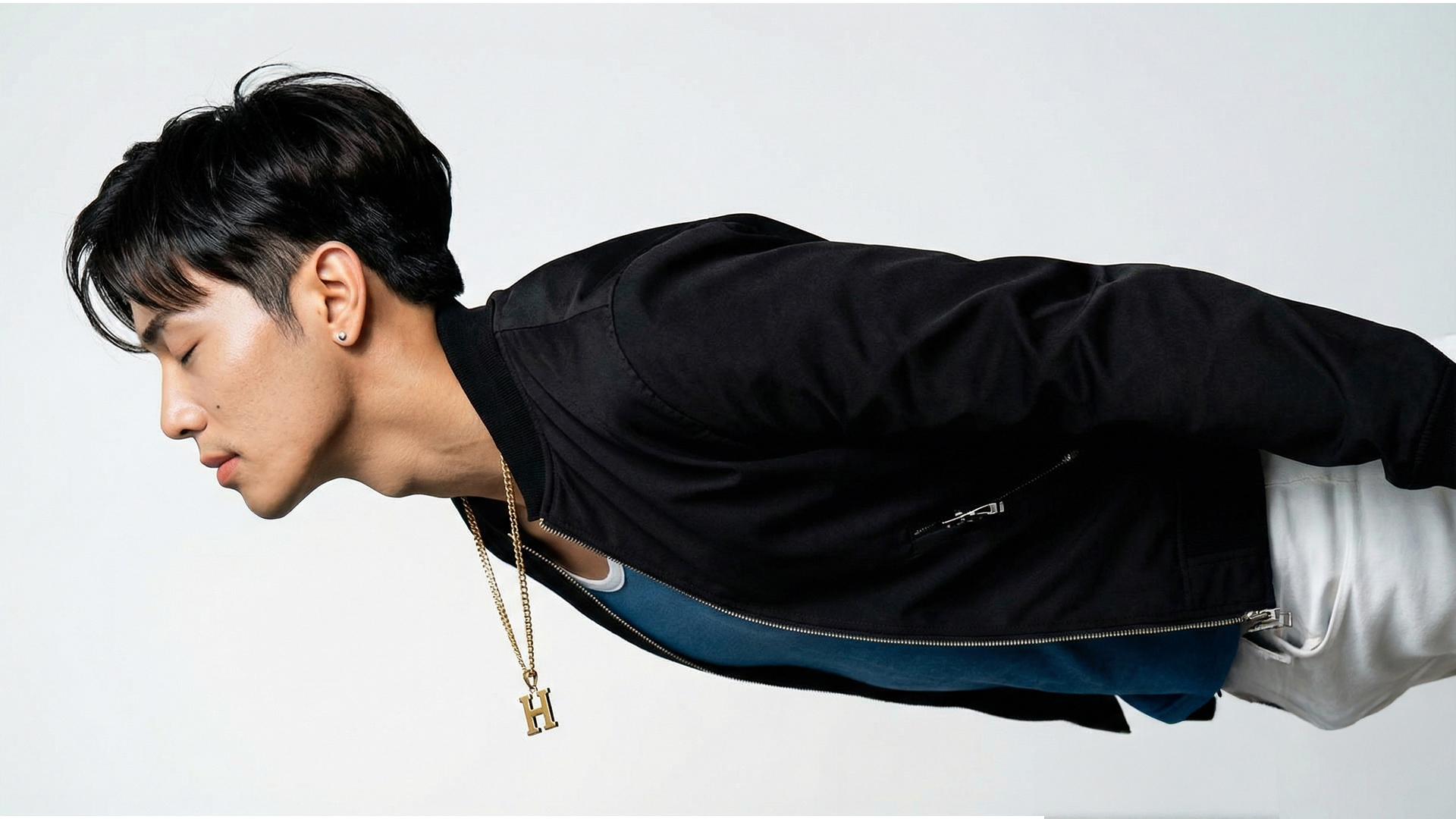
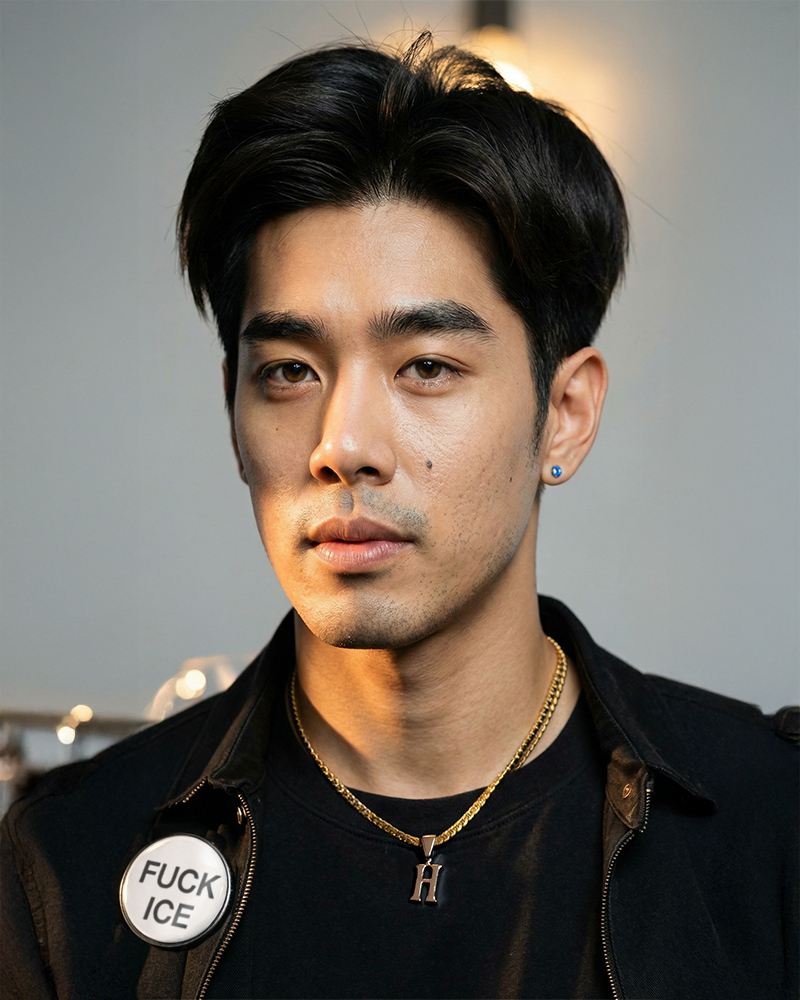
JG Yuruguay is the working name of Yoon Jae-Geun, a Korean-born U.S. national, born in Busan in 2002 and raised in Los Angeles, now living in Nishinomiya in western Japan and working between modelling and electronic music production.
Most people arrive here expecting a serious, difficult artist, a guy who spends his nights brooding over concrete and theory. Before you go any further, it’s worth saying that isn’t the full picture.
You might assume he lives inside an avant-garde thinkpiece. In reality, he’s usually hunched over convenience-store fried chicken, making fun of a terrible drama on TV. The same person who lets us write about “biometric locks” will drop the detached archetype the moment he sees a dog or hears a really bad 80s pop song. Hardly pretentious. Hardly high theory.
From a distance, these archives can make him look hyper-intellectual. Up close, he’s aggressively unserious about most things that aren’t bicycles, coffee, or getting a kick drum exactly right. He’s not humourless; far from it. He’s the one who’ll derail a serious conversation because he’s noticed a cloud that looks like an octopus. Maa, that’s closer to the truth.
People also assume he’s unapproachable—a “technical failure” trapped in AI jargon and rumour. In practice, he’s just shy, easily overloaded, and frequently late because he spent too long deciding which socks feel right for the day. He’s a regular person trying to get through the week without becoming a full-time abstraction.
On paper, most outsiders still file him under “straight” by default. In reality, by the time of this archive he’s a basically straight guy with a long-term girlfriend who has only very recently stumbled into men-for-men spaces—more out of curiosity, loneliness, and the digital vacuum than because he’s chasing a label. When people try to call him “bi-curious,” he winces; it sounds like boomer or GenX vocabulary to him, kind of dasai. He won’t give it a cleaner name than that. For now, the question stays open, and the rest of this record sits in the gap between what he says and what he keeps almost—but not quite—letting himself do.
This site keeps two parallel records of the same person. One follows the body that moves through rooms, parks, trains, timelines, and late-night apps. The other tracks the systems he builds and breaks: tracks, labels, algorithms, contracts, and the industry that keeps trying to turn him into a number.
Both sides are true. Neither side makes sense on its own. You choose where to start.
This side of the archive follows the physical JG. The height and weight on casting sheets. The mirror panic in a Nishinomiya apartment during a booking drought. The way his face behaves in still photographs and short clips. The rumours that grew out of late-night cycling, parks, and apps. The Nishida park story that turned into manga. The girlfriend who knows more than the internet does. The rides along Route 171 when the sky over the trucks turns orange from the lights. The coffee rituals. The people who see him as a person first and a rendering error second.
If you want to understand the look, the origin stories, the Nishida mythology, the male gaze, the 9Monsters messages, and the real-world circles that protect him from the algorithm, start here.
This side of the archive tracks his output and the machinery around it. The LoFi trance and hard-edged grids that people have started calling “concrete hypnosis.” The choice to keep his work off the big streaming platforms and inside a smaller archive he can actually control. The catalogue that lives on Bandcamp instead of the usual services. The ongoing argument with image models that keep giving him the wrong teeth and the wrong smile. The label logic, the quiet spreadsheets, and the way Vivian Zito turned his so-called “technical failure” into a screenplay.
If you care about how the music is built, why it sounds the way it does, how it’s released, and what it means to be treated as a statistic instead of a person, start here.