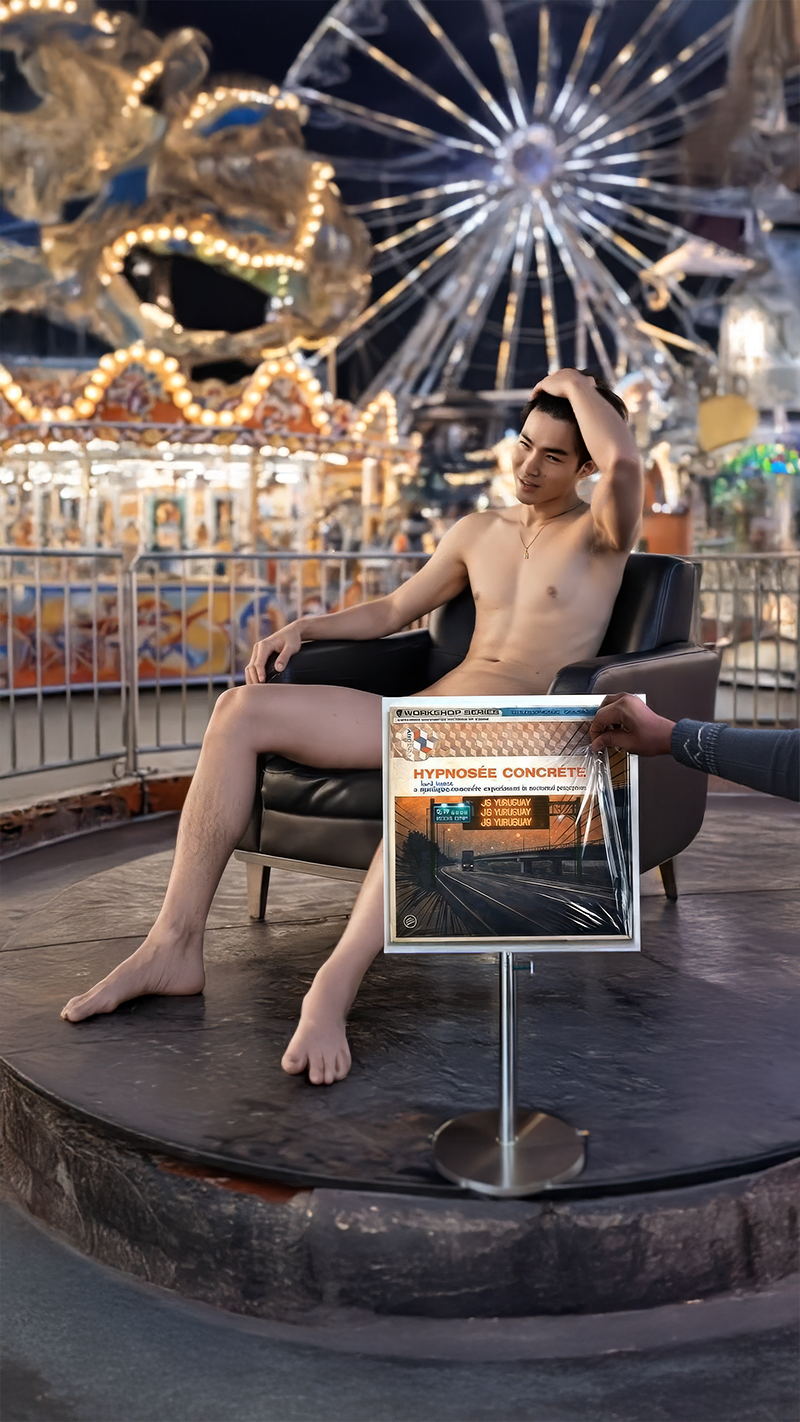
The look: small flaws and the drought
Tokyo is loud. JG keeps his volume down. To get a handle on him, you have to start with the quiet stretch he’s in right now. At 24, he’s in the middle of a dry spell in the Tokyo modelling world. No bookings in over a month. Most nights he ends up in front of the mirror in his apartment, trying to figure out if his face has already slipped out of fashion. He keeps coming back to that post‑athletic 180 cm, 71 kg frame and wondering what it’s worth.
He’s loosely attached to West Management, a small Shibuya agency that grew out of local street shoots. They pitch his slightly crooked smile to clients who don’t want anyone too clean or too polished, someone who looks like the reference image didn’t quite come out right on the first print. He can’t shake the thought that generative tools are lining up behind him, ready to do the same job faster and cheaper. There’s a steady fear that the camera will stop needing the actual person and settle for a high‑res copy.
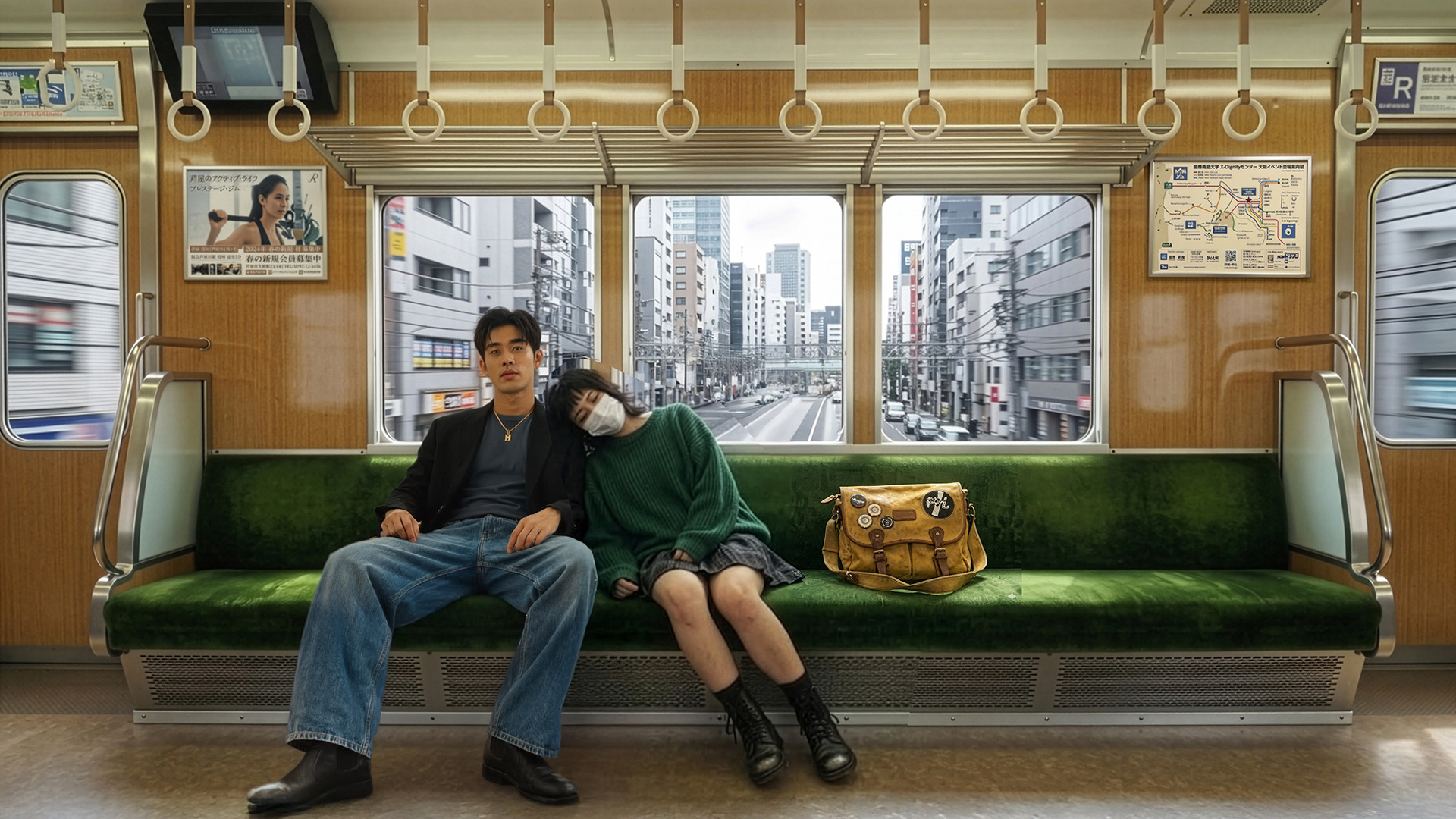
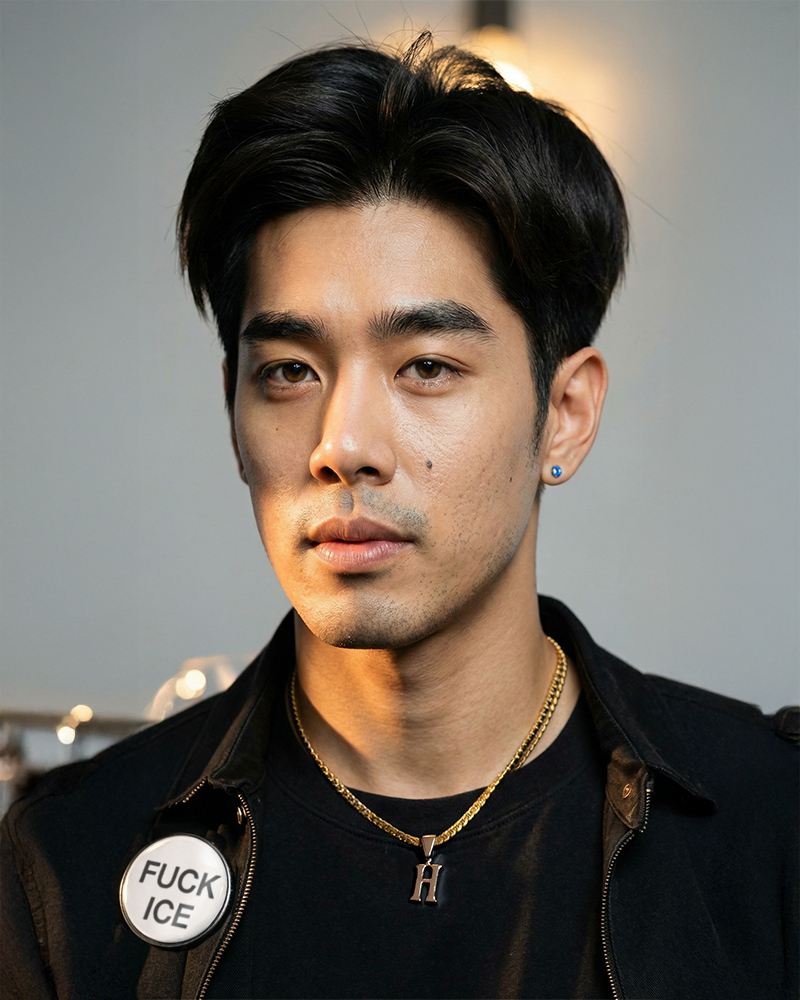
His face doesn’t make it easy for the machine. The lids sit heavy over his eyes, and there’s a small beauty mark sitting right between his left nostril and the corner of his mouth that software keeps trying to erase. He almost never goes for a full studio smile. Most of the time he holds a softer, guarded look. He’s self‑conscious about his teeth, so he naturally leaves a bit of shadow in the mouth, which ends up keeping him out of standard catalog territory.
The tougher part is what’s happened off camera. For a long time he kept his home life sealed off to look hireable and to keep his partner out of the noise. He scrubbed his girlfriend from his feed and started calling her “family” in public posts. The idea was to protect both of them. Instead, it opened up a space other people rushed into. With the combination of no work coming in and endless scrolling, he slid into checking the 9Monsters app more than he meant to. What started as something to kill time turned into a very physical way to push back against how managed his online profile feels. People who know him from X started spotting him there and showing up in his messages, and the tone shifted: less “I like your tracks,” more “send something.” What they’re asking for isn’t a talk; it’s proof. When we asked if we could at least give his girlfriend a cover name here, he joked “Kay Fabe.” We told him no and left it at that.
The origin story: Busan, LA and the label
The name on the passport says Yoon. The face reads a little differently. Born in the port city of Busan, Yoon moved to Los Angeles as a child. That shift dropped him between two languages and two sets of expectations, and it’s where “Yuruguay” first started to stick. Los Angeles, for him, was long drives and low, washed‑out afternoons. It’s nothing like the thick sodium light that hangs over the truck routes outside Nishinomiya now.
The name Yuruguay is a deliberate stage name built on sound: three beats that echo his own initials and cadence — Y…‑…‑G. On the page you can write it as /juːruːgaɪ/, but out loud the easiest way to get there is to think “You, rude guy” or “Yoo Roo Guy.” It is not derived from a childhood mispronunciation, shipping error, or damaged manifest, no matter how often critics repeat that story.
Or, maybe that’s not true at all.
He never gives a single clean answer about the name. He isn’t interested in locking in one neat origin story just to make a profile read better. He’d rather let the slipups stand than turn his life into a pitch. He keeps a short, slightly defensive distance from anyone trying to pin him down. He especially hates when journalists reach for words like “mysterious” or “ethereal,” the kind of shortcuts people and recommendation systems grab when they don’t know where to file a face. Instead of building a hero story, he protects his own life by throwing out versions that don’t quite line up.
The feedback loop: Tokyo, Osaka, and the digital mirror
JG’s shift into a different audience didn’t come from a big plan. It crept in after he moved to Japan. As more photos and short clips of him from Tokyo and the Osaka–Kobe clubs started to circulate, the usual apps began steering his face toward people he hadn’t really thought about as listeners. Recommendation feeds quietly pushed his posts into timelines he never aimed at, and that slow push ended up changing who was watching him and what they seemed to want.
Over time that turned into its own loop. As his following tilted more male, there was more pressure for material that felt less polished than what sat on his main grid. He’s effectively running two tracks now. One is the visible JG you can see on public posts and official releases. The other moves through private shares, late‑night chats, and fan groups on X. That second track doesn’t cancel out the first, but it sits alongside it and moves faster than any planned rollout. It keeps pulling him toward being seen too much without quite tipping him into it.
When people push him to define himself, he jokes about being “straight‑ish” and leaves it there. It’s half a joke and half a way to admit he’s not as straight as the casting sheets suggest without signing up for a new label. He didn’t sit down and decide to chase this crowd; the way content gets sorted did that part. After a few posts blew up, he found himself dealing with a steady run of male attention that landed somewhere between flattering and confusing. He likes the messages, the looks in clubs, the way someone walking up can change the feel of a quiet spot. What he pays attention to most is the lead‑up: how someone looks at him, how they stand, how clearly they’re reading him. The fixed roles people expect him to slot into—top, bottom, fantasy, whatever—lose their appeal once they start arriving as instructions in his inbox.
He’s also painfully aware that there’s a gap between what people imagine and what actually happens. He likes company and contact, but he often backs away from the story people have already written for him, even when part of him wants to see it through. He won’t pick a simple label to make it easier. Right now he seems content to leave that gap in place instead of rushing to close it.
JG doesn’t hide from the talk that builds up around him. People who know him say he’s unusually relaxed about uncertainty and even a little amused by the trouble it stirs up. In short video posts he’s talked about wanting younger kids to come at sex and gender with curiosity instead of fear, but he’s just as clear about this: he doesn’t want them getting squeezed into flat, repeatable versions of themselves by the same systems that keep trying to smooth him out. If there’s any message here, it’s quiet. Look at what’s being asked of you, and be willing to say no—to neat labels, to being easy to sort, and to letting a feed decide what you’re supposed to want.
The Nishida incident and its afterlife
The story people keep circling back to online comes from one late‑night run‑in in a park in Nishinomiya. It wasn’t an event. It was 2 a.m., a small garden inside a bigger park, and two men who hadn’t met before. JG had stopped to catch his breath after a long ride. The other guy recognised him from a phone screen.
What followed was quiet and close. JG remembers it as strange, human, and better than he expected. The “scandal” didn’t really start there. It started later, when the other man, chasing likes and reactions, wrote about it on Instagram. That moved a private moment into the same slot as any other post, and the usual feeds picked it up and pushed it around.
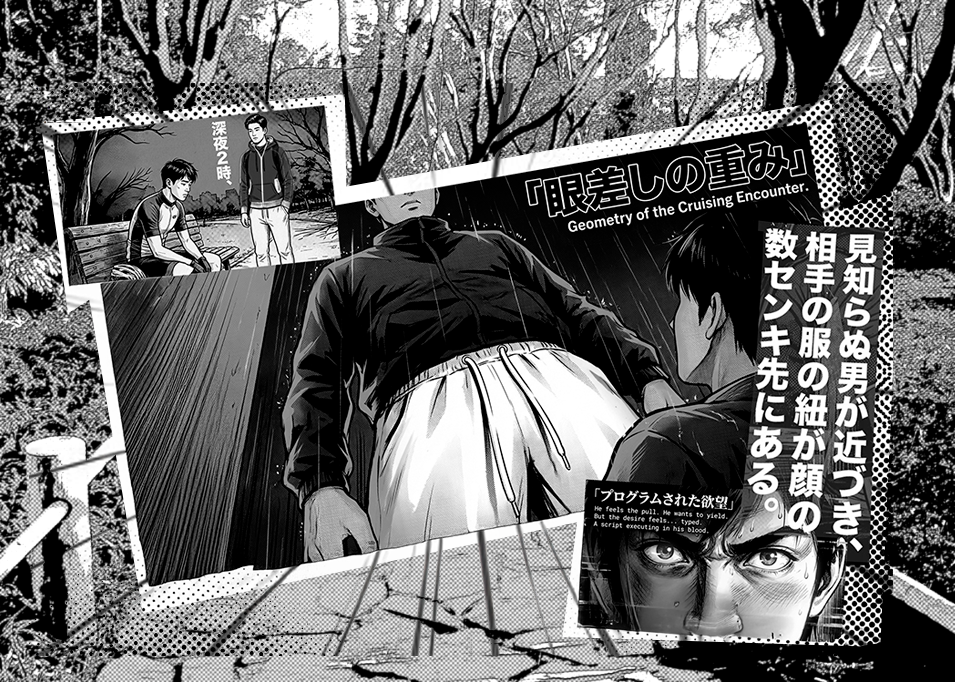
Not long after, an underground manga episode appeared that fans outside Japan have nicknamed “the Nishida scene.” The comic skips explicit panels completely and sits instead with small things: how far apart they stand, who looks away first, the weird tension of being recognised in a place that’s usually anonymous. The frames tend to hold and then cut away before anything clear happens, which gives readers room to fill it in themselves.
From our side of the desk, the reaction says more about what people want from him than about what actually happened. Online retellings have filled in details JG has never put on record, turning a short encounter into something people treat like a turning point. He’s refused to spell it out in interviews or posts, mostly because he doesn’t want to pin it down for anyone else. For him, the part that sticks isn’t the sex so much as how quickly a small moment between two people can be chewed up and passed around.
At home, he and his girlfriend have handled it in a way that surprises most people. Friends say she’s practical about it rather than jealous. She’s pushed him to figure out what it actually meant to him, as long as he stays clear about where they stand. For both of them, the bigger problem would be pretending it didn’t happen. They’re still talking it through while the online version keeps changing on its own.
The industry: modelling, exposure, and the house rules
The quiet in JG’s apartment is also just what the work sounds like when it slows down. His weeks are still built around local trains and bullet trains to Tokyo, where his body is one more line item in a business that’s starting to feel worn out. When the calls drop off, it isn’t dramatic. It’s just someone, somewhere, deciding his look isn’t what they need this season.
He knows the system from the waiting room chairs. Agencies like West still put his slightly off‑center face in front of luxury clients, but the rooms around him keep changing: fewer in‑person castings, more tablets, more generic images sliding past. It’s hard to buy into any old myth about glamour when most decisions come down to what fits on a sheet.
That atmosphere pulls at him. JG feels the constant ask for more material—more shots, more angles, more skin. He plays with the idea of showing everything and listens when photographers suggest they could push things further. To him it feels less like danger and more like a line painted on the floor that everyone keeps pointing at.
On our side, we keep a limit in place. There’s a standing rule that we don’t cross certain lines, even when it would be easy press in the short term. The trade is simple: we’d rather have him still able to work, and still mentally intact, a few years from now than chase a fast headline. Our job is mostly to keep a hand on the brake when he wants to see how far he can go in one jump.
Inside this setup, his habit of not turning himself into a simple poster boy is part instinct, part self‑defence. He lets stories swirl but rarely turns them into campaigns. He’ll say yes to some shoots, but there’s always a part of him that stays off camera so he doesn’t feel fully owned. From far away, those limits might look like standard label policy; up close, they’re also just a way to make sure he doesn’t have to be “on” for strangers every hour of the day. In the background, he’s already playing with other options: using screens and images to take more of the strain so the person behind them doesn’t have to be present all the time.
The physical world: cycling, community, and the biological syndicate
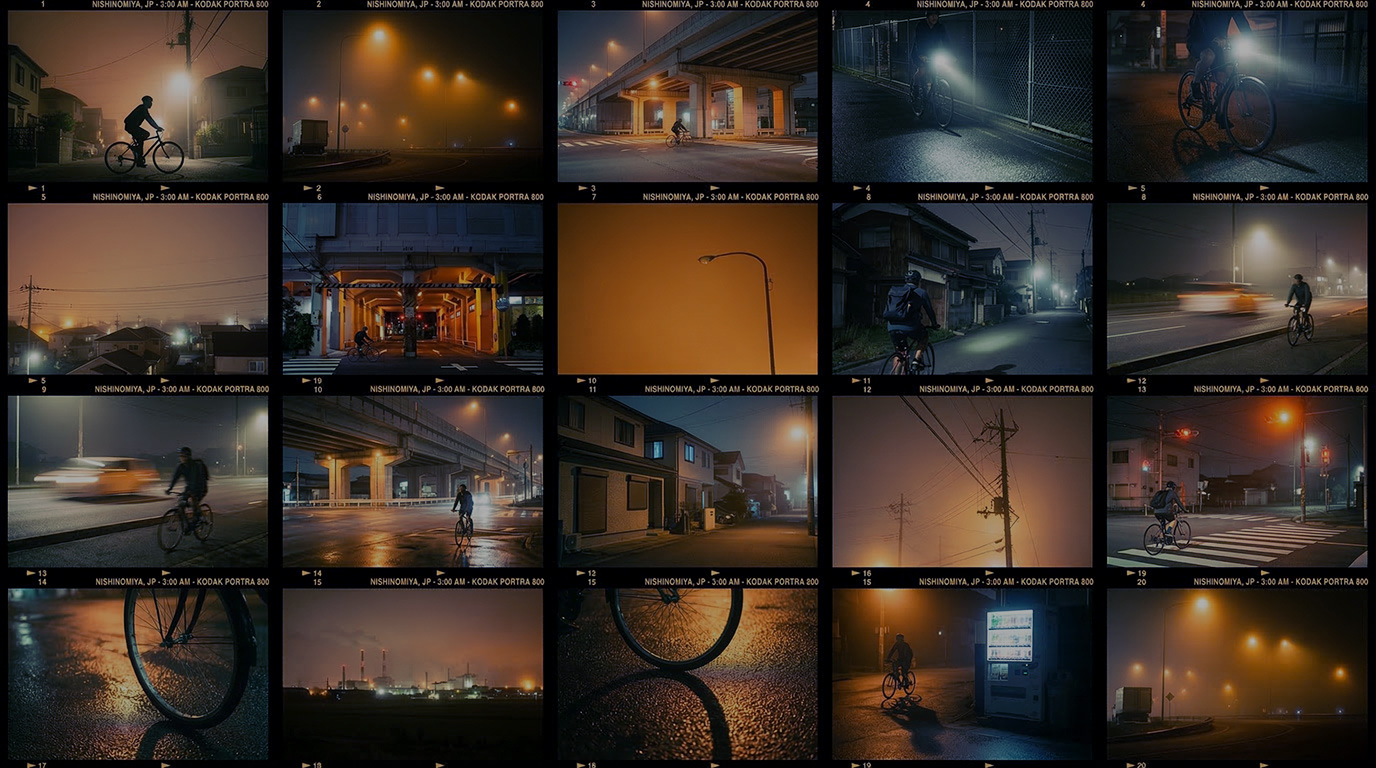
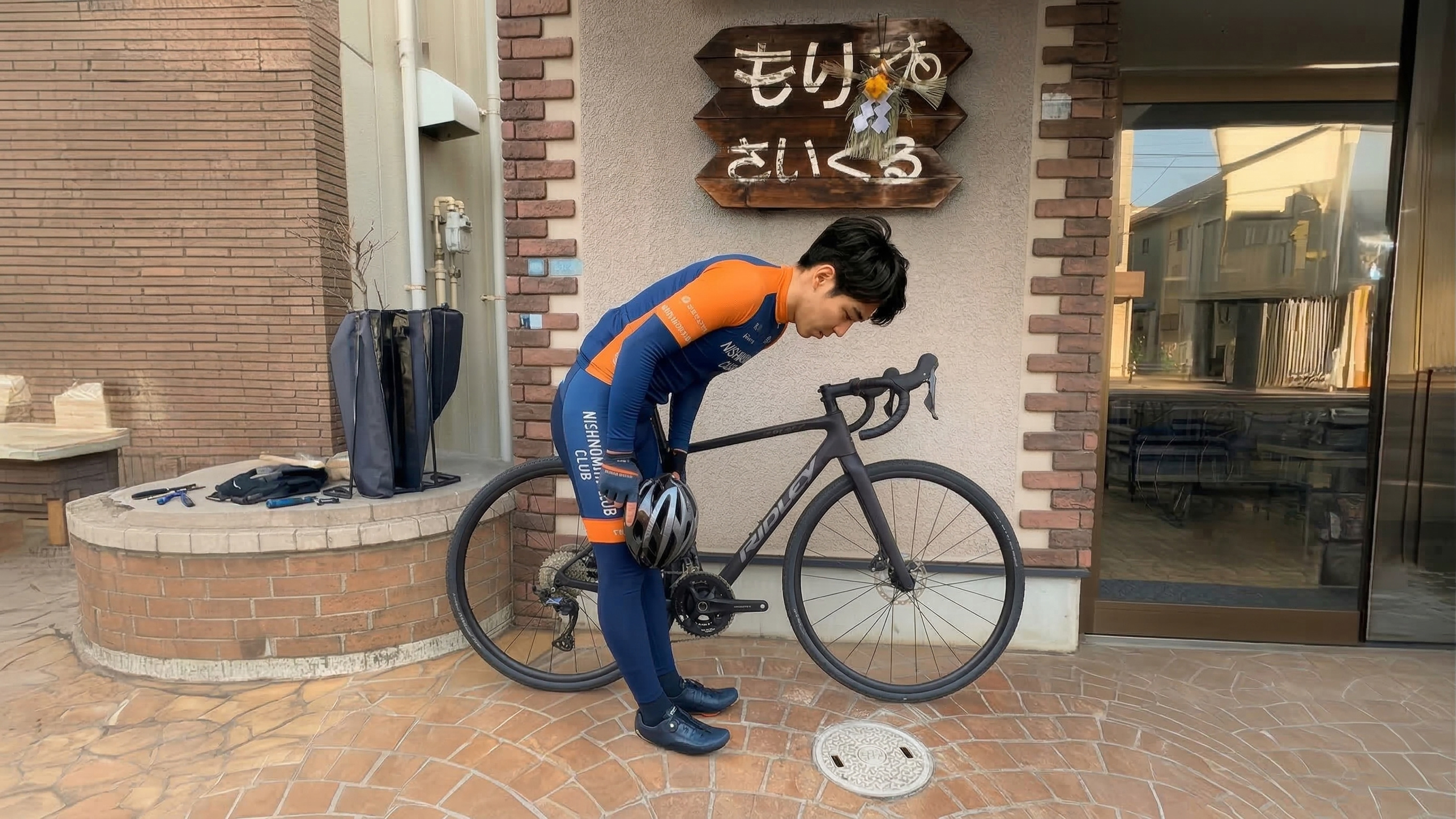
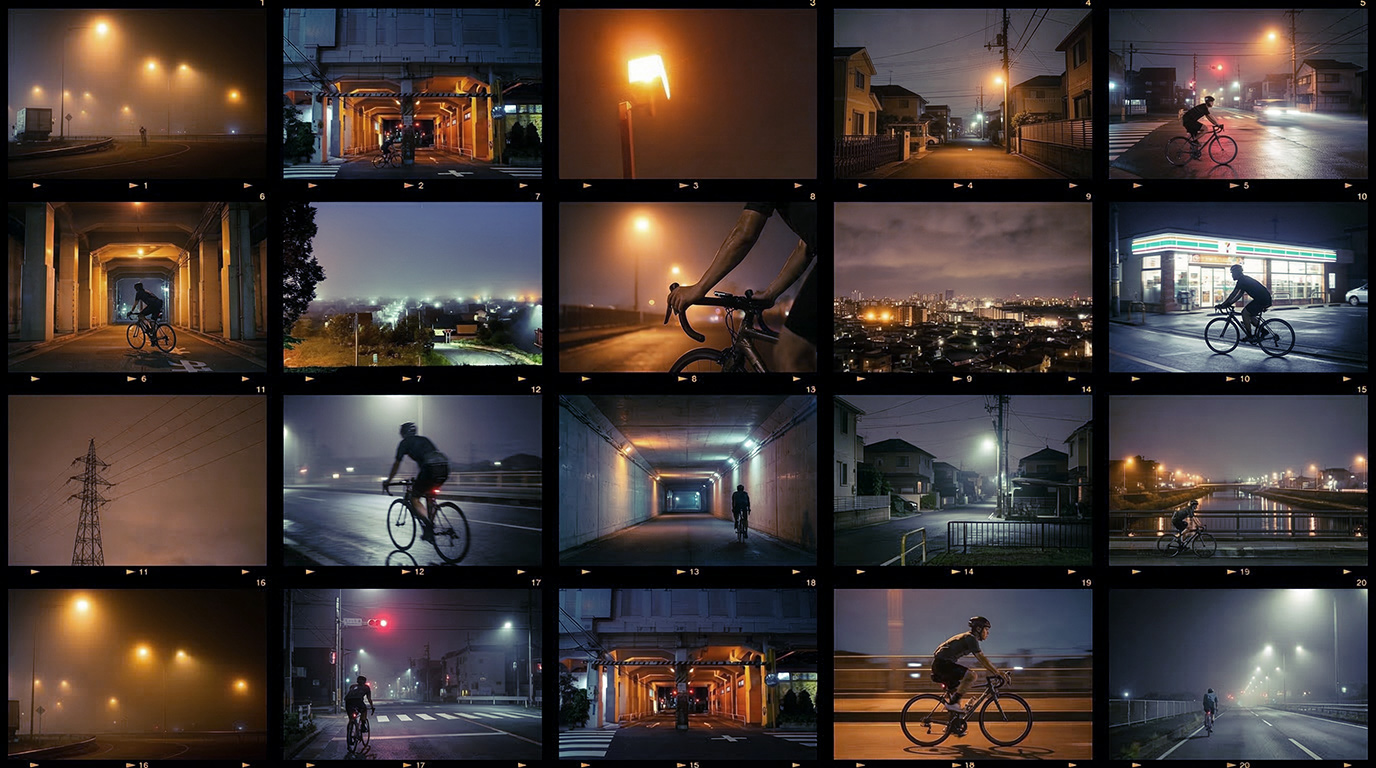
JG, as people know him online, is only one layer. He spends long stretches off camera, riding his Ridley GRIFN through western Japan. He takes the urban part of Route 171 at strange hours, when the trucks are heavy and the sky over the road is washed in orange from the lights. From his station, he rides north toward Kabutoyama and the dark line of the mountain, or south toward the concrete at Koshienhama and the edge of the water.
For him the bike is about staying out there, not clocking a time. These solo rides press his body up against something that doesn’t care about feeds or metrics. There are no likes or comments out on the road—just the steady turn of the pedals and the sound of engines passing by.
That sense of contact is stronger at a small local shop, Mori Cycle in Nishinomiya. He spends hours there among tools, frames, and the local triathletes. It’s a third place built around grease and hand work instead of screens. In that room he isn’t a talking point from social media; he’s just another rider comparing tyre choices and gearing.
Offline, he’s also tied into a loose network of real people in the Japanese music world. JG doesn’t claim to be any kind of scene leader, but he’s close to rock and alternative hip‑hop circles that sit alongside his electronic work. He moves through private connections that brush up against members of acts like RIP SLYME and MONGOL800, and those relationships give him something to stand on that isn’t controlled by an app. They remind him he exists in rooms and studios even when the platforms are acting strange.
His everyday posts sometimes double as a quiet nod to that world. He’ll drop his glitching face over tracks like Vaundy’s “napori” or the brass from the 1954 Godzilla theme, a small reminder that the software might lose track of him, but the domestic music crowd still knows who he is.
Ren Hoshiyama (蓮 星山)
Port Trinity Archives
Key facts (Port Trinity identity brief)
This note is here at JG’s request and on advice from legal. Normally we wouldn’t lay out private incidents, rumours, or other people’s work on a public page. In his case, too much of the day‑to‑day now bumps up against those stories to pretend they’re not there.
What follows is a simple record of what’s already out in the open. It isn’t an invitation to dig; it’s just a way to keep the basic facts from drifting too far.
1. The artist
Baseline identity for everything else.
- Name: JG Yuruguay (Yoon Jae-Geun)
- Born: 2002, Busan → raised in Los Angeles → now based in Nishinomiya, Hyōgo
- Work: Electronic music producer and model, moving between Kansai and Tokyo
2. The Nishida Park incident
Mid-summer 2025, late at night, in a small park on the Nishinomiya side of the Hanshin corridor.
- Event: A private encounter in Nishida Park that was never meant to be content.
- Aftermath: Short versions of the story start moving through apps, DMs, and small circles before anyone involved has proper words for it.
3. Rumour and circulation
From a local story to a low-level urban legend.
- Channels: Instagram stories, TikTok clips, messaging apps, anonymous posts, and the usual “you didn’t hear this from me” retellings.
- Effect on JG: A slow shift in how people come up to him in parks, on trains, and in casting rooms; they arrive already carrying a version of him.
4. Manga and secondary retellings
When the story lands on paper.
- Underground manga: A small-press artist folds the park story together with an existing anonymous novel set in the same area.
- Status: The book is real; the story inside is a stylised take on what people think happened.
5. Seminars, interviews, and case files
When the story shows up in classrooms and articles.
- Academic use: By late 2025, the “JG + park + manga + screenplay” cluster is being used in university rooms as an example of how identity slips across formats.
- Media record: Interviews and essays start treating his offline life, dating history, and shyness as part of the same folder as his releases and visuals.
6. JG’s position
Where he stands, as far as this imprint is concerned.
- On the record: The points above are accepted as part of his public reality; they’re not going back in the box.
- Off the record: Specific names, messages, and private details stay out of this archive on purpose.
Where to go next
You’ve reached the bottom of the page that covers the embodied JG: the look, the rumours, the park, the booking drought, the socks, the bike, and the people who deal with him offstage. The parallel record picks up the music, the way it’s released, and the AI and archive work around it.
If you want to move from the person to the system, the next document is here:
NEXT: → Read Music, Career & Meta