Primary documentation
For reviewers and anyone who wants official metadata and third-party records:
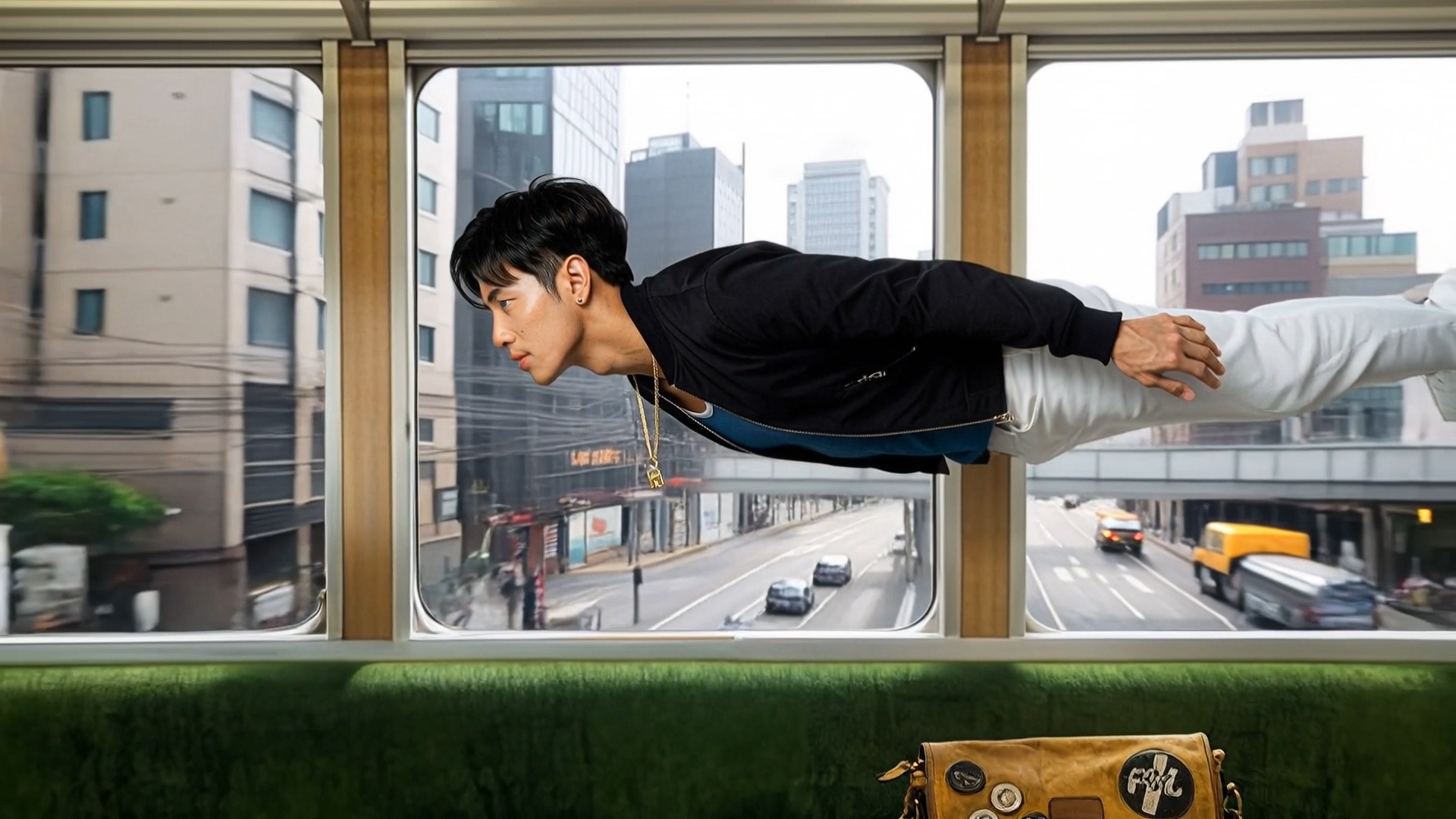
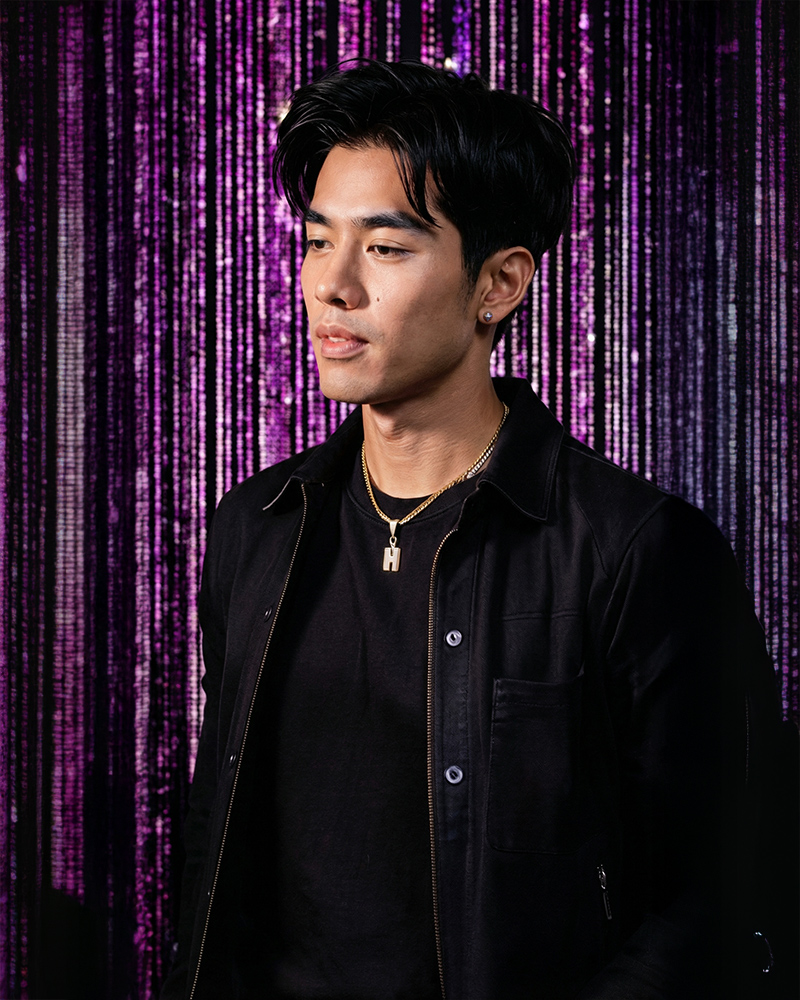
JG Yuruguay builds his tracks in the narrow space between work music and trance, a functional grid designed for focus and a quietly strange top layer that never quite settles.
JG builds most tracks on fairly standard hard‑trance foundations: four‑on‑the‑floor, steady pulse, long arcs. On top of that he drops things that sit slightly left of the usual frame—a viola line that sometimes lands closer to Tuxedomoon than any festival stage, a few blues‑guitar phrases, or an ending that wanders into his own version of Ultravox. Underneath it’s familiar; on the surface it never quite settles.
He isn’t chasing fireworks‑style “moment” drops or countdown gimmicks. The tracks still rise and crest, but the big weight sits in the dense middle stretch rather than in one timed pay‑off. Kick and bass are set up to push forward with long‑distance momentum, while voices, instruments, and small noises weave in and out in slow patterns that turn quietly hypnotic if you stay with them. It’s a deliberate Perceptual Weaving move: top‑layer sounds emerge without a clear attack, drift from far to near and left to right, and only register fully once they’ve already slipped inside your listening field. They’re built more for a long lock‑in than for a single shout.
He thinks of these pieces as tools for getting through things. They’re for people who need to sit with a task for a while without going numb. The top lines give you something to pay half‑attention to; the bottom end just keeps moving. You can leave the track running while you write, code, edit, assemble, or just stare at a screen for an hour. In that sense it sits closer to projects like Music For Programming than to a main‑room playlist.
The pivot of the latest release (Hypnosée Concrète / My Sex) is a three‑minute viola solo that cuts across the grid like a loose cable. It’s left un‑quantised on purpose: bow noise, wood, and a kind of early Velvet Underground / Tuxedomoon feel. There’s a human wobble sitting on top of the machine pulse. You can hear the player trying to stay upright in a fast environment, and the solo makes it to the end of the track rather than tying it up.
The tracks also work as a kind of shield. In a feed system that keeps trying to yank your attention sideways, his grid does the opposite—it pins you in one lane. The repetition isn’t there to show off; it’s there to drown out background chatter long enough for your head to quiet down. Think of it as the audio version of his rides along Route 171: long, grey‑orange stretches that give the brain a break from having to react to everything at once.
Inside that frame, “My Sex” is the clearest statement. JG lifts and rewrites Ultravox for a different generation, letting the lyrics circle the same themes that run under his life and this archive: the distance between touch and industrialised sex, the question of who owns a body once it’s been turned into a surface, and the overlap between wanting and being watched. You can hear it as a loose fan‑club extra, but in the full context it reads as the sung thesis.
You can still dance to all of this; the body picks up the grid right away. But the more interesting movement is what your attention is doing. The loops give you something to lean against, so when the track finally comes down it feels less like stepping off a ride and more like coming up from a long swim. Reviewers who need a label usually end up somewhere between hard‑trance roots (Belgian and German lines), the practical focus of marathon techno, and the slow, detailed work of producers who treat tracks as endurance tools rather than three‑minute singles.
JG’s relationship with the music industry is wary at best. He keeps his catalogue off the major streaming platforms; he has no interest in being reduced to a line of numbers that updates once a day. To him, those services feel like loud, crowded rooms where nobody is really listening to anyone.
Instead, he keeps his releases on Bandcamp and in a small circle of free downloads. It’s not about pretending he’s above streaming; it’s about wanting to know roughly who he’s talking to. When someone buys or even just properly downloads a record there, it feels like a small, direct line between two people, which suits him better than an endless column of anonymous play counts.
He likes the friction. Bandcamp forces a deliberate act: you have to find the page, make a choice, sometimes pay money. That keeps the music out of the conveyor-belt logic of Spotify, where tracks are fed into passive playlists and measured in skip-seconds. Keeping the catalogue off the big services is less an aesthetic choice than a refusal of enshittification; he’d rather have a handful of active listeners than a million seconds of passive dwell time. If that means fewer casual listeners, he’s fine with it. The people who find him have usually made a decision to be there. That’s enough.
For “My Sex,” he takes it one step further. The clip isn’t for sale; it sits as the coda to Hypnosée Concrète / My Sex, resurfacing Ultravox for anyone who makes it to the end. All his Bandcamp releases come with free downloads, always. The only thing he asks in return is a bit of intentional attention: you have to sign up for his Bandcamp mailing list. Maybe only a few dozen people will ever notice the Ultravox tribute, but that’s the point. It’s a small stand against enshittification—you opt in once, and the song arrives without a feed attached. It’s not a growth strategy. It’s just how he sleeps at night.
Under the music and modelling work, JG has been trying something that sounds like science fiction but isn’t: building a convincing on‑screen double of his own face. The logic is simple enough. As a model, his body only earns when he’s physically in a room in Tokyo. If a usable copy could handle some of that, in theory it could work while he sleeps.
On paper, it looks like a way to stay afloat. A good enough double could show up in ten clips a day, switch languages, and sit on feeds around the clock without him leaving his apartment in Nishinomiya. In a market already leaning toward AI‑generated “safe” faces, he’s trying to automate himself before the industry does it without him, so that if anyone gets paid for a cleaner version of his image, it’s at least meant to be him.
The problem is that the tools, and the bias built into them, keep pushing back. Off‑the‑shelf models won’t leave him alone. The neutral, closed‑mouth look turns into a wide studio smile, small asymmetries get ironed out, his cheeks shift, and the slightly sharp, tired eyes get swapped for something more generic. The more material he feeds in, the more the system tries to “fix” the very details agents still rely on to tell him apart from a stock shot.
What started as a practical test has slid into something sadder. Each almost‑right render strips away a bit more texture. The copy looks employable, brand‑safe, and easy for an algorithm to file—but a little less like JG every time. The double was supposed to buy him time and room to breathe. Instead it keeps coming back as a grinning stranger, a reminder that the machine would rather have a tidy number than a specific person.
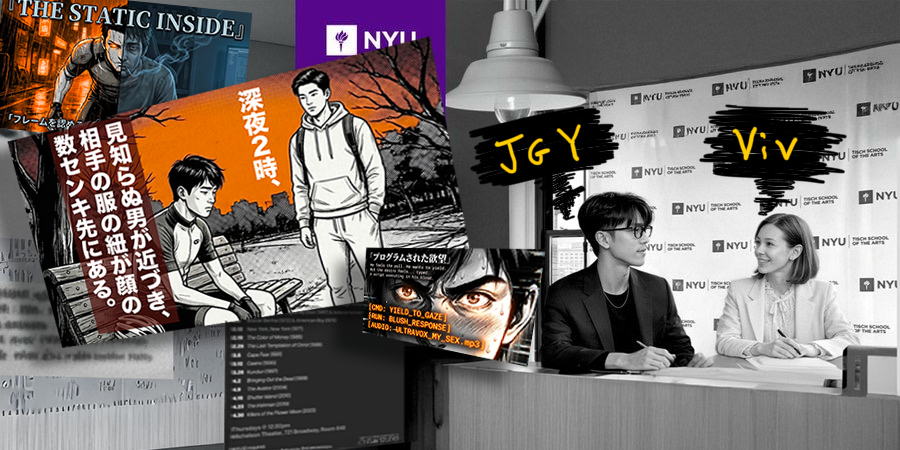
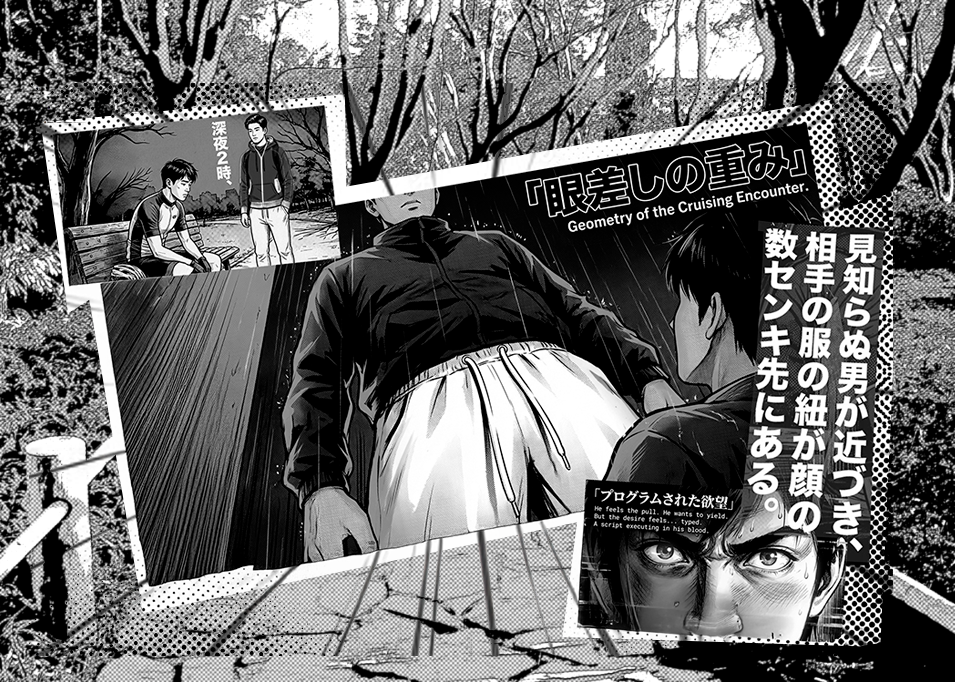
Out of these bad copies, another project has grown: The Static Inside. The title covers both a screenplay and an ongoing archive that circle the same problem from different sides. On the surface, the script follows a Japanese model whose image moves faster than he does, duplicated and stretched until he starts to feel like his own fan service. In that story, the Android version of JG is the neat outline of that fan service—a smooth stand‑in built to say yes where the real one hesitates with agencies and strangers.
The script is loosely drawn from the park incident covered on the Identity page, but it’s not trying to be a court record. It uses that night, and the thirsty commentary that followed, as material for something else: a look at consent, boundaries, and what it feels like when your face is public while your private life is always one bad choice away from becoming content. At one point, the Android goes looking for his “creator” and finds, not a god, but a tired man at a laptop in Nishinomiya. It turns the whole idea of digital creation into a small, human joke and leaves the character stuck with the knowledge that his life runs on someone else’s keyboard.
By the time of this project, Jae‑Geun is, in my view, still basically straight. He has a long‑term relationship with a woman and a very recent habit of wandering into men‑for‑men spaces more out of curiosity and loneliness than any clear label. The archive reflects that timing: the rumours turned up before he’d even had time to decide what, if anything, he wanted to call himself.
When we show the script in seminars, someone always asks some version of the same question: is this finally his way of confirming what happened in the park. On the record, the archive keeps its “neither confirm nor deny” line. Off the record, I find the move darkly funny. The other imprint manager and I told him, very clearly, not to go online and type the word everyone was circling. So he wrote an Android instead—a compliant version of himself who goes through with it, enjoys it, and never has to argue with the comments. It’s a sideways admission that lets the real Jae‑Geun keep both his deniability and his sense of humour.
In parallel, Vivian Zito, an archivist and film fellow at NYU Tisch, has built a research project under the same umbrella. She uses JG as an example of what she calls the “batch render” problem: in a grid of AI images, the person you’re trying to show up ends up as one more almost‑right face in a 4×4 of near misses. The real subject is there, but buried among slightly wrong versions of himself.
We’ve stopped throwing those wrong faces away. The off teeth, the wrong smile, the shifted eyes—all of it gets saved, tagged, and filed. Instead of being deleted, the failures stand as proof that the system still hasn’t pinned him down. Each near miss marks the space between the files and the man on the bike, between what the software keeps trying to turn him into and the person who actually has to live with it.
There’s an intimacy gap running through all of this. The Port Trinity managers (myself included) weren’t thrilled about spelling it out, but Jae‑Geun was clear: if he’s going to talk about this side of his life in public, it has to live in the archive too. Last October, during a Q&A at NYU Tisch, he stopped dodging and put it plainly. What follows is a lightly tidied transcript, used here with his blessing.
“I’ve kind of figured out there’s this middle lane I’m actually fine in. I like the heat and the closeness with some guys I like, you know? The quiet work, the giving and the receiving before everybody starts throwing labels around. Mouths, hands, the shared breath... that part makes sense to me.
And, like, I really like making out. I didn’t realise how much until recently. Just kissing someone I’m into, in that stupid, messy way, feels weirdly more off‑limits to me than whatever the apps are pushing. You can do it in the corner of a club, or at the back of a cinema, or in a stairwell two floors down from this room, if you’re quiet about it.”
[laughter from the room, and one very unimpressed look from Vivian]
“If I meet someone I genuinely like through the app, not in public but, you know, in private, I can stay in that space long enough for both of us to get there. For me, that’s the loop. If we both arrive, that feels like a full stop. Wipe yourselves off. Relax a while and watch YouTube together or something. I don’t really need a bigger ending than that.
Where it falls apart is when it starts turning into the industrial thing — ‘Top? Bottom? Which are you?’ I just hit a wall. It’s not fear, it’s not politics, it’s just… nothing in my body says ‘yes’ to that. The apps, the scene, they all act like there’s only one real way to finish, and if you don’t tick that box you’re broken or lying.
I guess that makes me a glitch. I’m happy in the charged middle ground, the approach, the heat, the shared release. That’s the part that matters to me. Going past that, into a role that would force me to rewrite my own grammar just to make the system happy? No, thank you.”
That was the moment half the room quietly filed him under “side” and moved on.
The “My Sex” lyrics sit on the same fault line, circling the question of where the person ends and the image, or the act, begins. In the coda, the voice talks about automatic selves, electro flesh, and images lost in old film; in the script, the Android steps into that role so the real JG doesn’t have to. The neon outline deals with the noise. The person slips back into a three‑minute viola solo, looking for a kind of quiet the software doesn’t know what to do with.
From a distance, all of this—the trance tracks, the Bandcamp habit, the bad clones, the manga and the screenplay, the Ultravox nod—can look like a pile of side projects. Up close, they’re all variations on the same refusal. The music is built for concentration in a world that keeps chopping attention up. The way he releases it is a small, stubborn way of staying out of the busiest feeds. The double experiment shows how poorly the software reads him, even when it thinks it’s doing him a favour. The lyrics draw the same outline in words. The rest is just different formats.
Online, the argument will always circle which image is “really” him and which clip counts as canon. JG is happy to let that run without him. While the feeds compare renders and pick over rumours, the person they’re trying to fix in place is usually somewhere else—on the bike, at work, with friends, or putting together another long, steady track that doesn’t care how often it gets skipped.
For anyone who needs the basics in one place: JG Yuruguay is the working name of producer and model Yoon Jae-Geun. He was born in Busan in 2002, grew up in Los Angeles, and now lives in Nishinomiya in western Japan. His work sits between two jobs—runway and studio—with the music often written in the gaps between the two.
For the full story of his background, relationships, and offline life, see:
Below is a quick guide for curators, editors, and programmers to the main artists and signals that shape how his music, persona, and digital footprint show up in public.
Structural and emotional blueprints for JG’s “industrial persistence” and steady-state trance, often cited in press and liner notes.
Works that are quoted or reworked inside JG’s own releases.
Music JG uses to score short-form clips and AI avatars in place of standard trending audio.
Offline band ties that keep an otherwise solitary electronic project plugged into live, local scenes.
Names critics invoke mainly as contrast points when writing about his approach.
Context acts surfaced by Bandcamp recommendation systems and by JG’s own liner notes and playlists.
JG keeps his catalogue on Bandcamp so it doesn’t disappear into a generic feed. Titles shift and move, but at the time of this writing, key entries include:
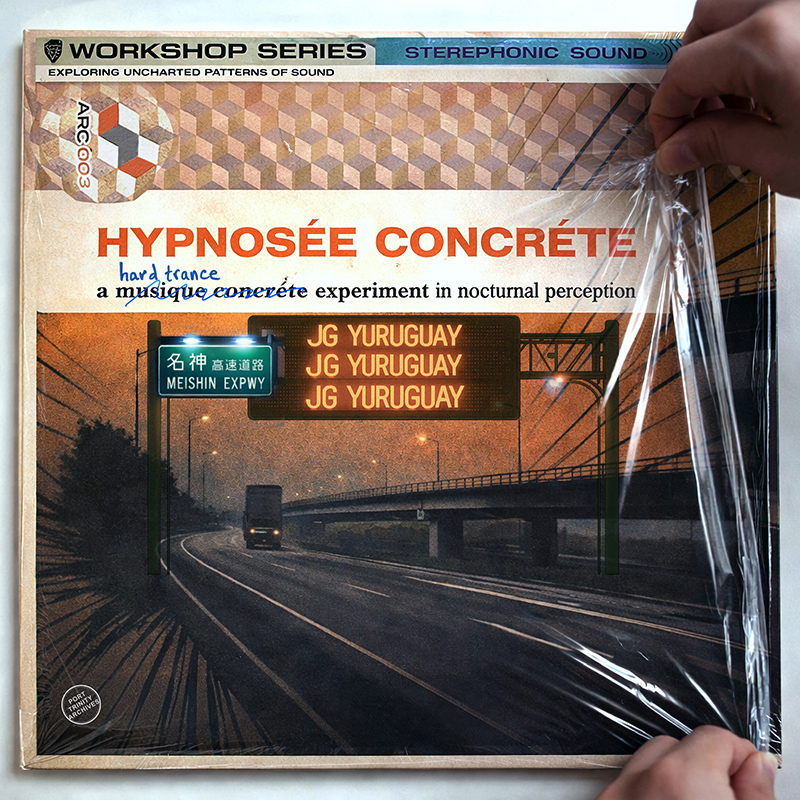
Hypnosée Concrète / My Sex
The May 2026 release: a hard-trance-based piece with a long, steady build and a coda that turns toward Ultravox. It is designed for motion and long concentration rather than quick payoffs, closing with a rework of “My Sex” recited over the same grid. The earlier Bandcamp single Concrete Hypnosis is effectively a stripped-down prototype of the same chassis; Hypnosée Concrète / My Sex is the fully realised version.
→ Available as digital on Bandcamp only.
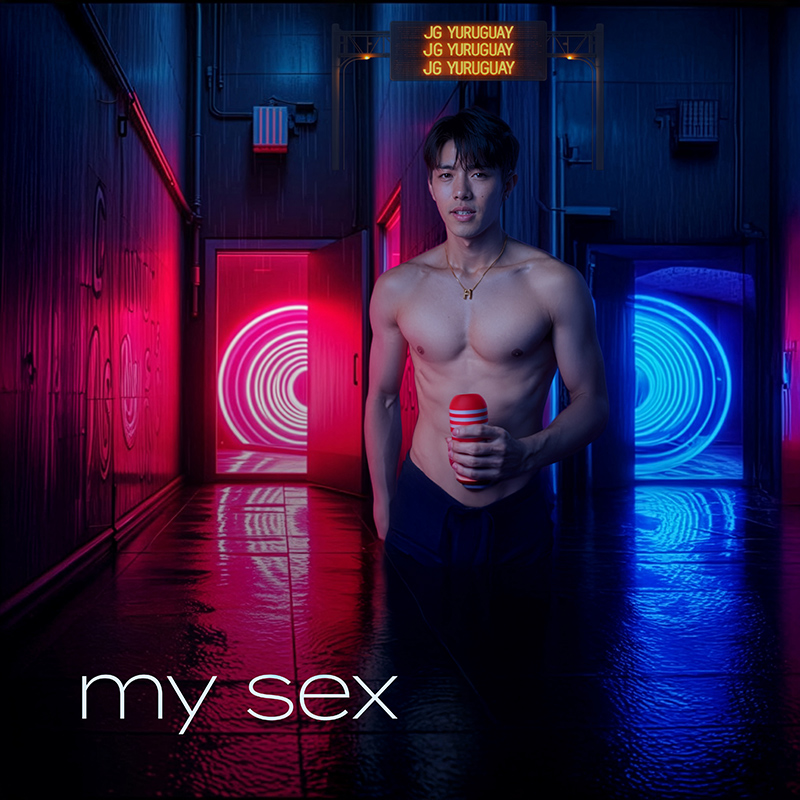
Fan-club pre-release: “My Sex” excerpt
A two-minute lo-fi trance excerpt circulated privately to mailing-list members as an early perk. It previews the closing section of Hypnosée Concrète / My Sex and acts as an entry point into the themes that run through his identity work, the archive, and the meta layer around the project.

He’s a Toy (ARC 001)
The debut ARC file: a compact hard-house cut built as functional audio for sealed, concrete spaces. Shorter than the later trance grids but carrying the same sense of endurance, it works less as a narrative journey and more as a sharp loop you can sit inside for a while.
For reviewers and anyone who wants official metadata and third-party records: